In this article, we will explore the various ways in which zellige is used in both traditional and contemporary architecture.
– Gardens and Zellige: A Perfect Harmony
In Morocco, gardens are considered an extension of the home. They are often designed as spaces for relaxation and leisure, where residents can enjoy the pleasant weather, unwind, and entertain. Zellige, a traditional Moroccan decorative art, is also widely used in gardens to create unique and visually appealing design elements.
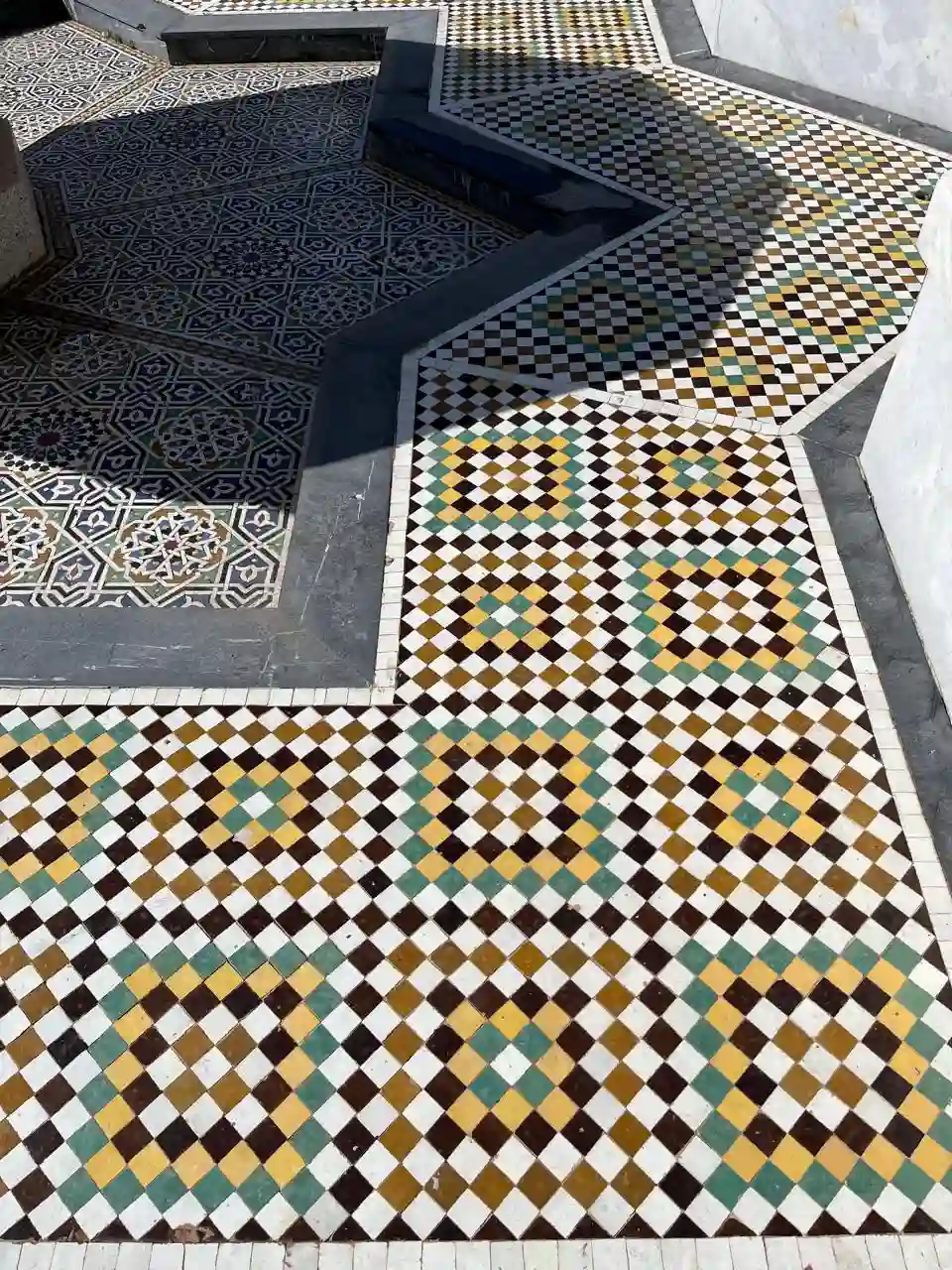
Zellige is also used to create decorative elements such as fountains, pools, boundary walls, benches, and tables. The intricate geometric and floral patterns of zellige generally blend beautifully with the greenery of the garden, adding a touch of elegance and sophistication to the outdoor space.
In Moroccan gardens, zellige fountains are especially popular. Beyond their visual beauty, they also serve a functional role by supplying water for the surrounding plants.
The colorful patterns of zellige also bring a touch of cheerfulness and vibrancy to the space.
Zellige boundary walls are also a popular addition to Moroccan gardens. These walls provide privacy and security while adding a touch of beauty to the space. The intricate geometric patterns create an interesting visual effect and draw attention to the boundary wall.
Zellige benches are also a common feature in Moroccan gardens. These benches are often integrated into the natural landscape and provide a comfortable place to sit and enjoy the garden. The geometric and floral patterns of zellige add a touch of beauty and elegance to these benches.
In addition to its aesthetic appeal, zellige also has practical properties in Moroccan gardens. The glazed tiles are weather-resistant, making them suitable for outdoor use without the risk of damage. Zellige is also easy to clean and maintain, which makes it a practical choice for outdoor spaces.
– Zellige Fountains: A Blend of Art and Water
Morocco is renowned for its exceptional craftsmanship, especially its zellige mosaics, a decorative art form made of glazed ceramic tiles assembled to create intricate geometric patterns. Zellige fountains, which combine this craftsmanship with the natural element of water, are a perfect example of the beauty of this art. Zellige fountains have a long-standing tradition in Morocco. The zellige tiles are cut into geometric shapes and assembled to form a complex pattern. These patterns can vary in size and complexity, ranging from simple squares and rectangles to more intricate shapes such as eight-pointed stars or rosettes. The tiles are then glued onto a base to create a fountain, which is filled with water to become a stunning water feature. Water has always been considered an important element in Moroccan culture. As a result, zellige fountains are often installed in gathering places such as public gardens, squares, courtyards, and patios of homes. These fountains are not only beautiful to look at but also serve as meeting points where people gather to chat, relax, and enjoy the coolness of the water during the summer.
Zellige fountains are not only decorative objects but also hold cultural and religious significance. Water is considered a symbol of purification in Islam, and zellige fountains are often used for ablutions before prayer. In mosques, these fountains are located near the prayer hall to allow worshippers to wash their hands, face, and feet before praying.
Zellige fountains come in various sizes, shapes, and styles. Some are very simple, featuring minimalist designs, while others are more complex and colorful, adorned with detailed geometric and floral patterns. Some are equipped with pumping systems to create more dramatic water effects, while others are designed to be purely contemplative.
The creation of these fountains is a demanding artisanal process that involves many skilled craftsmen. The zellige tiles are first cut and assembled by hand, then glued onto a base to form the fountain. The artisans use traditional techniques to cut and shape the tiles, which requires a great deal of patience and precision.
Mosques and Zellige: Timeless Beauty
Morocco is known for its rich cultural and architectural heritage, and the country's mosques are no exception. Moroccan mosques are not only important places of worship for the faithful but also remarkable examples of Islamic architecture and zellige, a traditional Moroccan decorative art.
The use of zellige in Moroccan mosques is far from new. The earliest Moroccan mosques date back to the 8th century, and zellige was already being used at that time to create unique patterns and designs. Since then, the use of zellige in Moroccan mosques has become a tradition and a distinctive feature of Moroccan architecture. For example, the Koutoubia Mosque in Marrakech is famous for its spectacular zellige patterns that create a mystical and spiritual atmosphere in the prayer spaces. Zellige patterns can be very complex and elaborate. Walls, columns, and arches are often decorated with zellige tiles, creating a fascinating visual effect.
Moroccan mosques are often adorned with intricate geometric zellige patterns. These designs frequently include stars, diamonds, triangles, and squares, creating motifs that appear almost hypnotic. The colors used in zellige are also very diverse, ranging from pastel shades to bright and vibrant hues. The patterns and colors of zellige add a touch of beauty and serenity to the space. Zellige walls are also a common feature in Moroccan mosques. These walls are often decorated with floral and geometric motifs, creating a stunning and enchanting visual effect. Zellige walls can also be used to create decorative niches and arches.
Finally, zellige floors are also a popular feature in Moroccan mosques. The floors are often decorated with intricate geometric patterns, creating a stunning visual effect when looking upwards. Zellige floors add a touch of beauty and sophistication to the interior space.
- Contemporary Homes and Zellige: A Harmonious Combination
For centuries, zellige has been used to decorate buildings with traditional Islamic patterns. However, recently, zellige has found new life among designers and architects who increasingly use it to adorn contemporary homes and their spaces.
Zellige can be used in various ways in contemporary homes. For example, it can be applied to create wall coverings, floors, and even furniture pieces such as tables and countertops. The intricate geometric patterns and vibrant colors of zellige can add a touch of beauty and sophistication, enhancing interior spaces like kitchens, decorative walls, and bathrooms.
Zellige walls can be used to create spectacular and eye-catching wall decorations. The geometric patterns of zellige can be employed to design modern and minimalist styles or more traditional and eclectic looks. The colors of zellige can also be chosen to harmonize with the home's color palette, creating a cohesive and balanced appearance. Through its textures, zellige can be worked in various ways. Indeed, different glazes can be used to add color to the desired pattern, but it is also possible to highlight the raw material by using the chiseling technique, which involves removing the glaze after firing to give a new dimension to the intended design.
Zellige floors can also add a touch of beauty and sophistication to a contemporary home. Intricate geometric patterns can be used to create interesting designs on the floors, adding texture and visual interest to a room. The colors of zellige can also be used to create striking contrasts with other elements in the space.
Zellige furniture pieces can be another way to showcase the beauty of this Moroccan decorative art. Zellige tables can be a particularly interesting choice for a dining room or living room, adding a touch of sophistication and originality to the space. Zellige can also be used to create decorative items such as framed mirrors, light fixtures, and vases. These elements can add elegance and color to a contemporary home.